Borrowed Change
For anyone wondering what to do when you copy your friend’s creative writing homework and realise you’re doing physics
‘We need to implement these new processes but they were all based on us getting a new system which we didn’t get.’
An all-too familiar story for many. A sweeping review by a large consultancy delivers a report that is devoid of team and organisational context. Report delivered, they’re gone, your team is left to pick up the pieces and try to make it work. It seems simple but you can’t get it to move forward.
You’re stuck.
The ask of me in this situation was to just help with some change comms so that people would know about the new processes and not be able to claim ignorance. That’s not how I work because shouting a wrong answer louder won’t make it right.
In this case, we got everyone together for 90 minutes. Now I know that might seem like a tall ask in today’s time poor world but if you’ve been going in circles for three months maybe it’s worth a shot.
Within the first five minutes, just from asking, ‘tell me why we’re here,’ I could see there’s plenty going on. It was a classic tale of competing priorities, concurrent reviews, and change without context happening elsewhere that was having ‘unexpected impacts’.
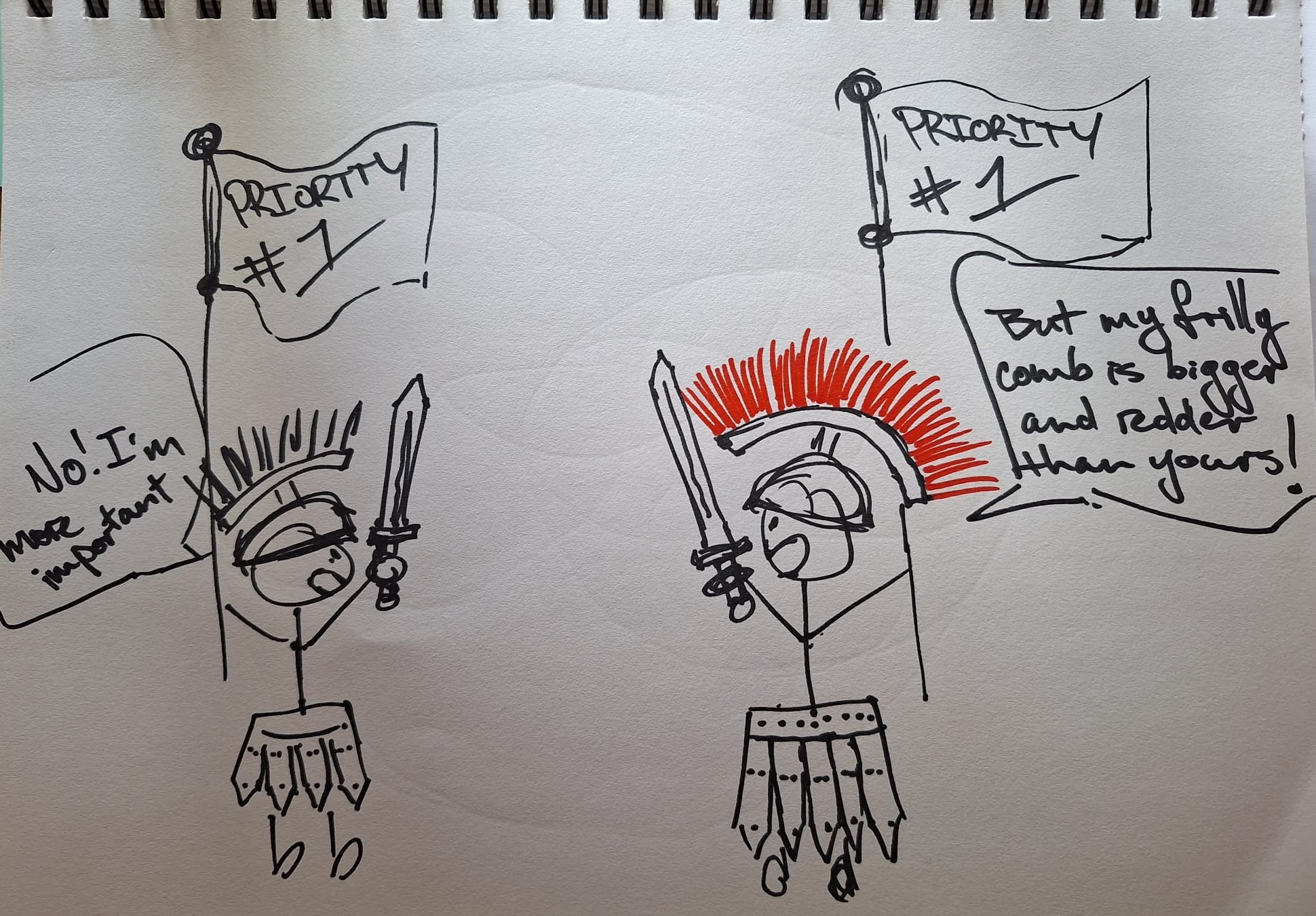
It’s the typical daily absurdity that happens in all organisations at some point. So when comments like, ‘we need to get them to just do as they’re told and follow the process,’ started to come up, I began to wonder if their desire for control was a response to feeling like they had none. I listened some more. Then asked, ‘do you think it’s intentional?’
No, people were just trying to find answers wherever they could was the response. That helped set the stage for getting creative and finding a sustainable solution. Beforehand, the task had been make people do as they’re told. Now the task became, make it easy for people to follow the right procurement pathway. I played back the scenario, drawing as I went, and set the boundaries for the rest of the session.
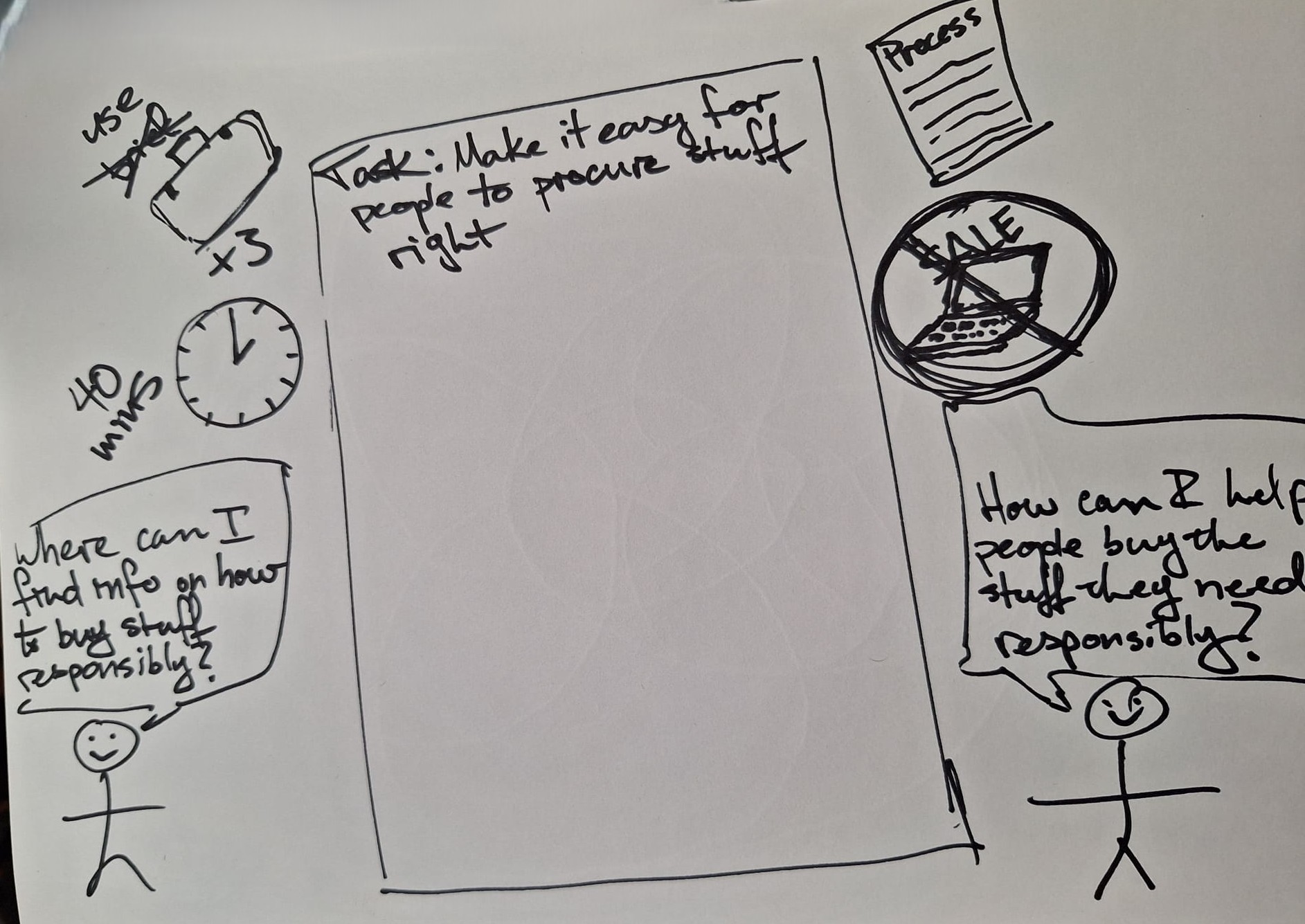
- Help the people on the board
- Stick to the 3 use cases we’d uncovered
- Do it in the next 40 minutes
- Keep to the approved process outcomes
- No new tech
Before the 40 minutes was up, we had a solution, using existing Microsoft applications, that was within the boundaries we’d set. Now we had our next task, make it real. We set a time for another session in two weeks. It needed to be done by then, and they were responsible for getting it done.
Two weeks later they’d finished it. They’d also made improvements based off real feedback from real people. It was ready to launch and after a bit more facilitating around how to get the word out, they were capable of doing the rest themselves. Another two weeks later it was up and running and most importantly they could handle any changes that needed to be made themselves.
In the space of a month, the team had gone from not knowing what to do with someone else’s idea to having a working solution they had created, launched and could keep adapting themselves. When you facilitate change with people, instead of trying to manage it in, you get the kind of change teams can sustain themselves. Set the boundaries well enough, and teams bring their expertise to make better changes than any outsider ever will. Sometimes that saves time. Sometimes it saves millions of dollars and a lot of pain. So what could 90 minutes save you?